

The Quiet Revolutionary: A Final Conversation With Dr. John M. Perkins
The 'Father of Christian Community Development' reflects on his radical conversion and his final manifesto for a divided Church in this 2018 exclusive Q&A published online for the first time.


Dr. John M. Perkins was a man who lived a thousand lives in one. A sharecropper’s son who fled the murderous racism of Mississippi only to return to it with a Bible in his hand, Perkins spent seven decades architecting what he called a "quiet revolution."
As the founder of the Christian Community Development Association (CCDA) and a spiritual advisor to five U.S. presidents, he transformed the American evangelical landscape by insisting that a gospel that doesn’t seek justice for the poor is no gospel at all.
Though he was brutally tortured by police for his activism in 1970, Perkins emerged with a prophetic commitment to "One Blood" — the belief that reconciliation is not a social project, but a mandate of the cross. As those he inspired and touched mourn his passing at age 95, Perkins’ words remain a North Star for Christians still navigating the stormy waters of racial and spiritual division.
Editor’s Note: A Final Prophetic Message
Following the news of Dr. John M. Perkins’ passing on March 13, 2026, we are releasing for the first time online this exclusive conversation originally published in Faithfully Magazine’s Summer 2018 print/digital edition (downloadable for free below). At the time of this interview, Dr. Perkins was 88 years old and preparing the release of One Blood — a book he considered his “final message” to the Church. In the wake of his death, we present this Q&A as a tribute to a life that embodied the gospel.
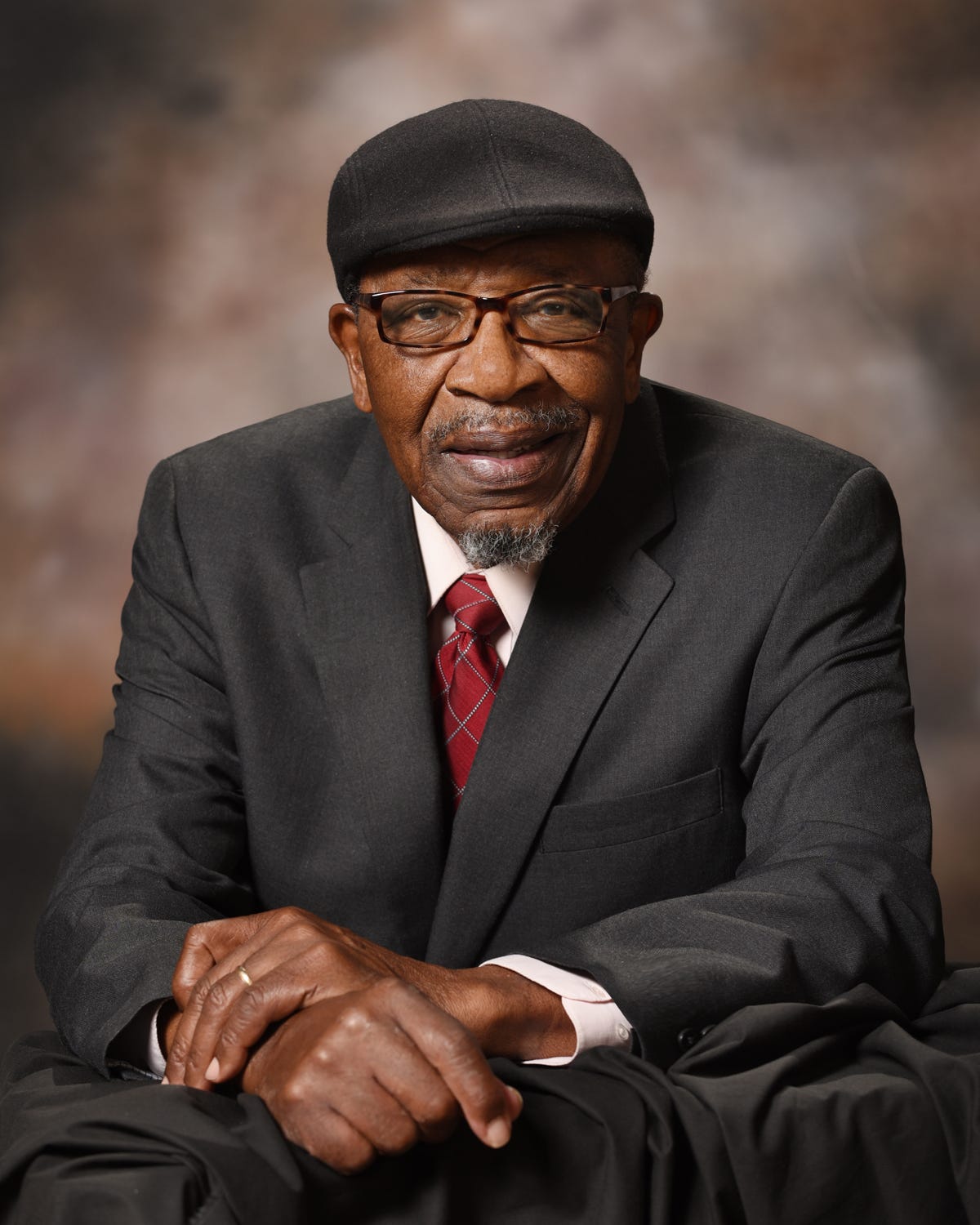
Faithfully Magazine: Dr. Perkins, according to your autobiography, you became a Christian in Southern California somewhere around 1957. Can you briefly explain how the Lord worked in your heart to bring you to Himself?
Dr. John M. Perkins: I was beginning to seek because of my family’s formation, my lack of skills, and my desire to be successful. I began on this search for meaning in terms of my family and my own life, and I think it was out of that seeking that I was led to the place where I heard the truth of the gospel and God gave me the faith to believe.
I lived in a changing community in Southern California — Blacks were beginning to move in and Whites were beginning to move out. We were being faced with a better reality than what I had in my first seventeen years of life in Mississippi. In that environment, my family got involved [in the church] and our oldest son, who was three and a half years old, started going to a Good News Club and then to a Sunday School. I began to hear a kind of behavior that was different from Mississippi. We were not Christians [then], so we hadn’t been influenced with really knowing the terms of the Christian faith. It was more like hearsay and folklore in life.
So, when my son started going there and coming home and singing these songs – Blacks and Whites were coming together with the children — I’m hearing a message that was much clearer than I had ever heard in my life: “God loves the little children, all the children of the world. Red, brown, yellow, black, and white, they are precious in His sight.” We didn’t grow up with that! That sounded more like that could be a God bigger than us, who might have created us as we are. That sounded more relevant to me.
And I think it was in that searching for that reality and getting an explanation in creation that affirmed the dignity of all people. That truth that I considered sounded more like truth that there was a real God in heaven. If there’s a God in heaven who loved me enough to send His only begotten Son into the world, I wanted to get to know Him. I think it was in that environment, in both hearing it and being in a relationship where Blacks and Whites were seeking to share that together, that I found what I considered the reality of God.
FM: Your latest book, One Blood, is being presented as potentially your last message for the church. Why did you choose this topic to be your last message? Why is racial reconciliation so important for the church?
Perkins: For many years I was trying to put together a memoir, which was Dream With Me. As I was reflecting, and looking back through my Christian conversion to see how God was leading me, I began to realize the need for me to make a creative statement. My publisher and others began to say, “Could you make a statement, maybe like what Peter made in 2 Peter or like Paul made in 2 Timothy?” That I’m getting close and my departure is at hand. You know, I have already sort of fought a good fight.
“It’s ultimately not racial reconciliation; it’s reconciliation of humanity because we are all broken by sin — both by Adam’s sin and our own sin.”
In One Blood, I’m trying to say that what brings human dignity together is one God, one Mediator between man, and that He has created man to reflect His image and likeness, and we should affirm that. That’s a missing element in our society.
There’s all of this “two races, three races” and the Bible doesn’t affirm that, but we keep talking around that. It’s ultimately not racial reconciliation; it’s reconciliation of humanity because we are all broken by sin — both by Adam’s sin and our own sin. That’s sort of missed today. Or, better yet, it’s not quite clear enough today.
And so, we’re always striving, thinking that if we reconcile without conversion that somehow we’re going to be okay. So, we end up mixing it up the political reconciliation, government reconciliation, and good society loving our neighbor. But the real cause for reconciliation is that God so loved this humanity that He gave His only begotten Son, and we’re born into the family of God. This is not based on circumcision or White folks just getting right with Black folks. There is one God, one Mediator, and Jesus Christ came as the second Adam to reconcile man back to Himself, and then He commissions us to be the reconciler and bring a message of reconciliation, the good news, His gospel. I don’t think we hear that clearly. I think we operate too much out of the culture.
FM: If I’m not mistaken, you’ve been active in ministry through the terms of at least 5 U.S. Presidents, and it has been 50 years since the assassination of Dr. Martin Luther King Jr. Has the conversation of racial reconciliation changed much since you first became part of the conversation?
Perkins: We went round in a circle, and many Evangelical churches accommodated that — not all of them though. Many churches couldn’t reflect on that truth that they had to embrace about humanity. That’s shaky right now. There’s a need for a more definite statement about humanity. We are broken.
I see it’s a big circle, when we ought to be more enlightened, and I think that’s creating the problem. We are more enlightened. We do have Facebook. We now text each other. God puts an important place for having knowledge, wisdom and progress. Instead of going back to the Stone Age, we ought to be thinking about more affirmation of the truth.
Now, if you stay with just racial reconciliation, well, I’m speaking to you here, and I couldn’t have done that back then. I would have gotten locked up in jail. They would have found some reason to lock me in jail as a Black man. I was arrested and tortured in jail. I mean, that was evil.
But now, there are Black folks saying “Black lives matter, too,” and White folks feel that that’s a revolutionary deal. They’re just saying “Black lives matter, too.” What I heard when I got converted was that “God loves the little children, all the children of the world. Brown, yellow, black, and white, they’re all precious in His sight.” That sounds like it might be the truth. But now, “Black lives matter, too” is questioned as a truth. It’s seen as if people are saying that Black lives matter more than White lives, and that’s seen as a threat.
FM: How would you encourage Christians who have given up hope for racial reconciliation? I’m talking especially about Christians of color who have become incredibly discouraged through their experiences in predominantly White churches.
Perkins: If we can affirm that people are created in the mage of God and ask God to forgive us for our past, I think He’s still faithful and just to forgive us, and now He can begin the process of healing our land. Just as He delivered Jonah from the fish, He will deliver us in terms of our returning to Him so that we can be the church, His body, joined together across these cultural barriers and being His true representatives here on earth. I say that’s the best we can do.
All of our methods going forward are as a pilgrim. That’s what makes John Bunyan’s Pilgrim’s Progress so powerful. Bunyan’s pilgrim got the sadness and weight of the world on his shoulder, so another pilgrim had to help enlighten him on the way.
The future needs to be led by the Shepherd. As we walk, Psalm 23 tells us that He’s leading us through and around, preparing a table before us, removing our anxieties when we get stuck, and at the end of our life, He takes us into the presence of the Lord. He gets us there. So, we don’t have a clear, altogether prophetic view of all the details of us getting there, so that’s why we have to always come back to trusting in the Lord with all our heart and lean not on our understanding. We listen to our Shepherd and He has to guide us in.
In the New Testament, when the church spread out to Antioch and beyond, and when Peter and Paul were going to the Gentiles, the Council in Jerusalem asked the question, “What is God doing?” James answered that question when he said, it looks like what God is doing is calling out from all nations all the ethnic groups. He’s calling out from them a people to bear His name, and they will know we are His followers by the love we have one for another. Love affirms the dignity of humanity, and I think God’s redemptive idea came about because he created this humanity to be one so that we could reflect His life here on earth.
FM: The Lord has used you in so many different capacities to serve His people, and I pray that the Lord will grant you many, many more years of service in His kingdom. How would you like Dr. John M. Perkins to be remembered? What would you want your legacy to be?
Dr. John M. Perkins: Well, I sure would want to be remembered for having gratitude for God’s redemptive love. I really would like to be remembered as one who affirmed the dignity of others, and I believed in the redemption of others.
I couldn’t do this if I didn’t forgive those jailers who tortured us. I couldn’t do that if those Whites whom I forgave hadn’t come and loved me and joined with me. I would want to be known that I was able to forgive, and that I still found the strength to love back. That we joined together in a movement where we’re going to love each other. I think that’s what reconciliation is.
Free subscribers who would like to download the digital edition of Faithfully Magazine No. 4 (Summer 2018) can purchase it here.
Paid subscribers can download the digital edition of Faithfully Magazine No. 4 (Summer 2018) for free when logged in by clicking the “download” button below (only visible when logged in).
Keep reading with a 7-day free trial
Subscribe to Faithfully Mag to keep reading this post and get 7 days of free access to the full post archives.