



Editor’s Note: This post was adapted from the feature “Redeeming the Time: Black Christian Leaders on the Nation’s Reckoning and Racial ‘Awakening,’” published in Faithfully Magazine’s Fall 2020 print issue. The original article featured a panel of leaders, including Dr. Irwyn Ince, the Rev. Michael McBride, the Rev. Traci Blackmon, the Rev. Dwight McKissic, and Dr. Van Moody.
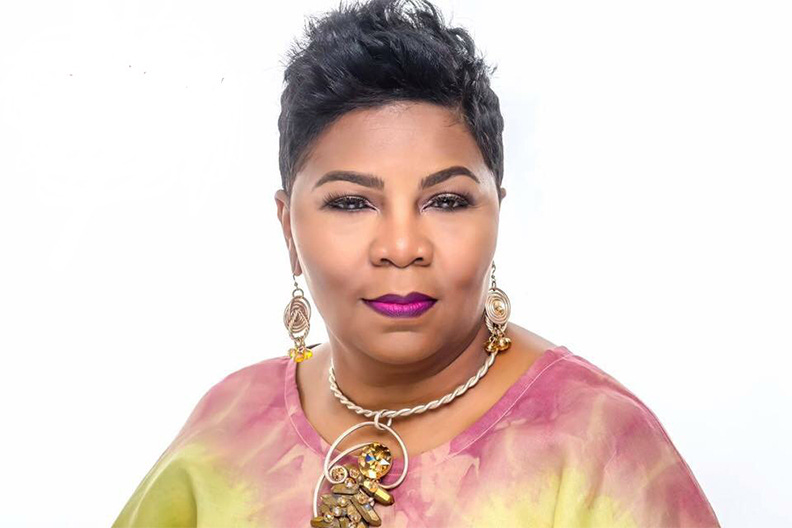
At the time of this interview, Blackmon served as the associate general minister of Justice and Local Church Ministries for the United Church of Christ (UCC) and senior pastor of Christ The King United Church of Christ in Florissant, Missouri.
Something happened to the national conscience on May 26, 2020, as cellphone video emerged of now-former Minneapolis police officer Derek Chauvin — hands tucked casually inside of his uniformed pant pockets — kneeling on George Floyd’s neck for 7 minutes and 46 seconds, snuffing the life out of him as three other cops looked on.
Almost immediately, people in Minneapolis took to the streets, defying social distancing orders to demand justice and denounce the police. As the COVID summer wore on, every state in America and dozens of countries around the world saw similar protests (and even now, protests continue). Antiracism books flew off shelves, launching history and race authors onto bestsellers lists. Christians who had never taken to the streets before, including often silent Asian-American communities, spearheaded solidarity marches for Black lives.
So it would seem that through his final breaths, Floyd persuaded Americans who had previously been oblivious, antagonistic, or shy about confronting racism to propel their bodies onto the streets and, in some cases, face off with militarized police forces. Many of these newly-persuaded protesters were noticeably White people — seen among crowds pulling down statues of Confederates and colonialists, chanting “no justice, no peace,” and holding placards aloft that declared White Silence Is Violence.

Floyd’s murder may have indeed been the catalyst for the surge of corporate diversity statements, a football team finally changing its racist name, and acknowledgement by the NFL that Colin Kaepernick was, in fact, right. But revelations about the earlier unjust killings of Elijah McClain in Colorado, Ahmaud Arbery in Georgia, and Breonna Taylor in Kentucky at the hands of law enforcement or White vigilantes certainly added fuel to fire.
Outrage over their deaths have been expressed in calls to “defund the police” — that is, abolish the police or reallocate funds from police departments into community services — and resulted in noteworthy changes. Among measures targeting police accountability and bias crimes, Georgia passed a hate crime law; Aurora, Colorado, banned chokeholds; and Louisville, Kentucky, banned no-knock warrants in a law named after Breonna Taylor (whose killers remain free). Despite these changes and intense scrutiny, police keep killing Black people, and at a disproportionate rate (20 percent of people killed by police in the wake of Floyd’s death were Black, while Black people are just 13 percent of the U.S. population).
And now, as the season changes, White people say they are tired. But it’s not the same kind of soul-crushing fatigue experienced by Black activists and others who regularly engage in justice work.
Support for the Black Lives Matter movement has waned among Whites and Hispanics, according to the Pew Research Center, and White Christians have become less motivated to address racial injustice, with fewer even acknowledging America’s race problem compared to last year, Barna Group reports.
The one group that consistently presses on because they cannot afford to take time for granted — or rely on “good White people” — are Black folk.
The Rev. Traci Blackmon, acknowledged by the White House, the NAACP, and the Vatican for her work on the frontlines in Ferguson, Missouri, amid the 2014 uprisings, is appalled to see how civility has essentially been thrown out the window.
“It’s not like we had the Civil Rights Movement and now everyone loves each other. But there were expectations on behavior,” Blackmon told FM. “Now you have political leadership that not only violates that himself, but also condones and compliments those that violate it with him. So there’s this permission to be othering.”
Blackmon resigned from her role as associate general minister of Justice and Local Church Ministries for the UCC in 2023. She is currently Pastor-in-Residence and Lecturer at Eden Theological Seminary and also founder of HopeBuilds LLC, a consultancy focused on building just and equitable systems.
Below is our exclusive conversation with Blackmon that was excerpted in Faithfully Magazine’s Fall 2020 issue. It is published here in its entirety for the first time. The transcript has been edited for clarity.
The Present Moment and Racial Awakening
FM: What do you make of the present time we’re in and what do you see as the church’s most important role right now?
Rev. Traci Blackmon: That’s a complicated question. What I think we are seeing culturally and socially in this moment is a different kind of awakening. And I wish that I could say that the process [of] that awakening was brought on solely by the state-sanctioned violence against Black people. In particular, the moment of George Floyd’s death as a focal point of this.
I believe that while George Floyd’s death might have been the last straw, that what we are experiencing in an awakening is also connected to the political climate of the last four years. Through a national leadership in our highest office and below that has increasingly become a more racially intolerant, more xenophobic, more blatant in white supremacist actions and thought, and more vocal about that in ways that we have not seen in my lifetime.
I’m 57, and I was born in Birmingham, Alabama. Even at that time, there were voices in the highest levels of office in government that always served as a check and balance of racist rhetoric, because we have a president and a Senate who are acting in sync in that way. We have judges that have been appointed — over 100 judges — and federal positions and Supreme Court nominees and attorney generals that are all speaking this racialized rhetoric. I believe that we are in a heightened state of violence. And all of that violence isn’t physical. It’s emotional violence, it’s verbal violence, it’s spiritual violence.
We see even in the realm of church, this division of church to be the religious right —so they call themselves — or the conservative arm, and the progressive liberal arm or the left. Yet, we all claim to follow the same Jesus in the Christian realm. We’re seeing those divisions in other faith expressions, as well. So what I believe George Floyd’s death did in the height of an epidemic, where people have been sheltering in place, where people’s lives have been interrupted, and then to see this man literally asphyxiated on the asphalt in Minneapolis with such casualness by someone who was in a uniform, was just the tipping point that caused people of all skin tones and people globally to recognize that we could not be silent anymore. And that literally all of our breaths were at risk.
Permission to Be ‘Othering’
FM: So you feel like the political climate is unprecedented, as well? And people are more freely expressing their racist and prejudiced views publicly?
Blackmon: I don’t think it’s new thought, it’s new behavior. You know, it’s not like we had the Civil Rights Movement and now everyone loves each other. But there were expectations on behavior. There were expectations on public expression. There were expectations on how one had to treat another person, and now you have political leadership that not only violates that himself, but also condones and complements those that violate it with him. So there’s this permission to be othering.
I don’t want to just say it’s just race, because it’s not just race. I mean when you think about the fact that we elected in this country, not by popular vote, but significant voting, we elected in this country a person who is documented and recorded for his misogynistic sexist statements towards women, some of which were violent. And yet we still [elected him].
We elected to [lead] this country a man who spent the last eight years being vocal in a birther campaign that he knew was a lie and eventually admitted it was a lie. Yet we still did it. This is a man who took out a page in The New York Times, a full-page ad, to ruin the lives of five Black boys who are now men, and have been exonerated from that crime that they never committed, and would not apologize for it. We elected a man who, unlike any other man we’ve ever elected into this office, refused to disclose his financial tax returns. Not only that, his private businesses of his own [have been positioned] in ways that they have been able to profit from his Office and no one’s called him on it.
Not only get away with it, but be supported in it. Not only get away with it, but be supported politically and be supported religiously, and be supported socially in it. We have a president who watched what happened in Charlottesville — and I was in Charlottesville — and could not bring himself to condemn white supremacy. And still hasn’t. Never had.
This is new. It’s just fascinating to me.
A ‘Kairos’ Moment
FM: Some people have been calling our current time unprecedented. Would you also call it a kairos moment?
Blackmon: No, because for me kairos time is God-appointed. I don’t consider this God-appointed time. I consider this the consequences of our sin, if I was going to put it in theological terms. It’s that moment when we have to come face to face with who we are and who we’ve become and decide who we’re going to be.
I spent most of my morning this morning in conference calls with my staff about preparing for this election, of course, and preparing from a church standpoint. So we want people to vote. We don’t tell people how to vote. I don’t have an interest in telling people how to vote. I want people to vote their principles, or at least what you profess your principles to be. I think if people do that, we’ll be OK. I always think that, Red or Blue.
However, that wasn’t the conversation we needed to have. We needed to have, as the church, [a conversation about] what is going to be our role in trying to play a part in restoring human dignity and decency into a society that’s been ripped apart. No matter who wins on November 3, and we won’t know on November 3, but whoever wins the election, whether it’s Republican or Democrat, we still have a nation that has been torn apart. And who’s going to do the work of repairing and rebuilding relationships in a capacity to see one another as human beings, whether we agree with one another or not? Who’s modeling that?

There was a time when even in politics people modeled that. I mean, that’s a part of the rule with John McCain, right. I’m not a John McCain fan, but I respect his service to this country in the military and certainly I respect his service to this country in [the] legislature. So who are the John McCains? Who are the John Lewises here, to a certain extent, who will cross over the aisle and have civil discourse with one another even if you disagree? Who are those people?
That didn’t start with Donald Trump. I can’t put that all at the feet of Donald Trump. I don’t think Donald Trump is responsible for everything. I think Donald Trump exists because of the climate that we were creating. So who’s going to do the work of repair? And at one time, it would be the church. But the church is complicit in the chasms that are formed in this country now.
Moving Forward
FM: Where do we go from here? What things do you think need to happen to move the country and the church forward on racial justice? What are some things you would like to see realized?
Blackmon: That’s the conversation. Those of us who are called to be of a higher mind and a higher office theologically, whether we are on the right side or the left side, we have got to begin modeling again, the ability to hear one another and to see one another and to respect one another and to care for one another’s humanity, even when we don’t agree. I mean, that’s a part of the priestly role, right? We have no civilization if we can’t be civilized with one another.
We have watched, politically, people have [unintelligible] fights about benefits that are life and death for people. Life and death. And we’re arguing over things that don’t matter. We’re seen under leadership that tweets all night. These times are unprecedented. And the media is just as complicit. I’m still trying to wrap my mind around this. I’m trying to wrap my mind around when tweets became news. I get it, that’s all you got. And it’s the president. I get that. But what happened to unbiased reporting? Whether we’ve lost it or whether we haven’t lost it, I really don’t know. But it feels like we’ve lost it.
What We’re Missing
FM: Do you think there is anything missing from the ongoing protests or conversations about racial justice?
Blackmon: What I think is missing is what’s always been missing, which is an accurate historical narrative of this country — of the history of policing, of the racialization of our judicial system. None of that is in the narrative, so it is like taking a scripture out of a story and just talking about some scripture and not looking at it in context, or pulling up a scene in a movie not knowing what came before or after it and critiquing the movie on that thing.
So tearing down statues was never about statues. It was about the lies that this country represents and idolizes through those statues. That is not the truth of this country.
These Confederate people were not heroes. They were treasonous. And yet we have statues that concretize them as some kind of hero, which is a false narrative.

For me, hearing the phrase “defund police” is not so much about not wanting police — though there are people who think we would be better off without law enforcement — but it’s about paying attention to the social services that are underfunded, and the way that police units are funded at military-type rates that support a structure that would say certain people should be controlled instead of investing in a better life for all of our citizens. There’s a deeper conversation than what happened just in a chant or in an action or in the street. There are things, yes, that I think are deeper than what we’ve seen, but they’re not hard to see if we want to look.
Remaining Hopeful
FM: Are you hopeful? What would you need to see to feel like we won’t be at the same place three or four years or six or seven years down the road?
Blackmon: I am hopeful. I mean, seeing people rise up, even if it was at the expense of a man’s life — his life was worth more than that — but seeing people rise up and begin to show up differently, that gives me hope, because something has been awakened to remind us that this is not who we have to be. This is not who we are. And that always gives me hope.
My hope is not in political leadership. My hope is in God and in the human spirit. And I believe that when we get back to a place of seeing one another without all of this rhetoric that people emphasize with pain — that moment of watching George Floyd die, I believe, made people realize just how out of breath we all are.
That gives me hope that we can still realize that. That we can go from a place where the man who took a knee on a football field — not because he was against the flag, but because he wanted to call the flag to its highest and remind us of what we’re supposed to be living up to — had his entire career ruined, and then in the aftermath of George Floyd, football owners and football teams were given permission to do that. Law enforcement officers taking a knee in the streets because they realize that this is too much — that gives me hope.
I don’t have hope that changing to a different president is going to fix all of that. But I do have hope in the human spirit, and I have hope in the God that is with us, even when we mess up. I have great hope in that.